Continuous body temperature monitoring that never sleeps.
A 2-gram wearable sensor with medical-grade ±0.2°C accuracy, recording every 5 seconds for 7 days — a continuous fever monitoring system that scales from one feverish child at home to an entire hospital ward on one dashboard.
A continuous fever monitoring system, not just a thermometer
Every P20 deployment starts with the same 2g sensor. What changes is who's watching: a parent's phone, a bedside display, or a nurse console covering a whole ward.
P20 Sensor
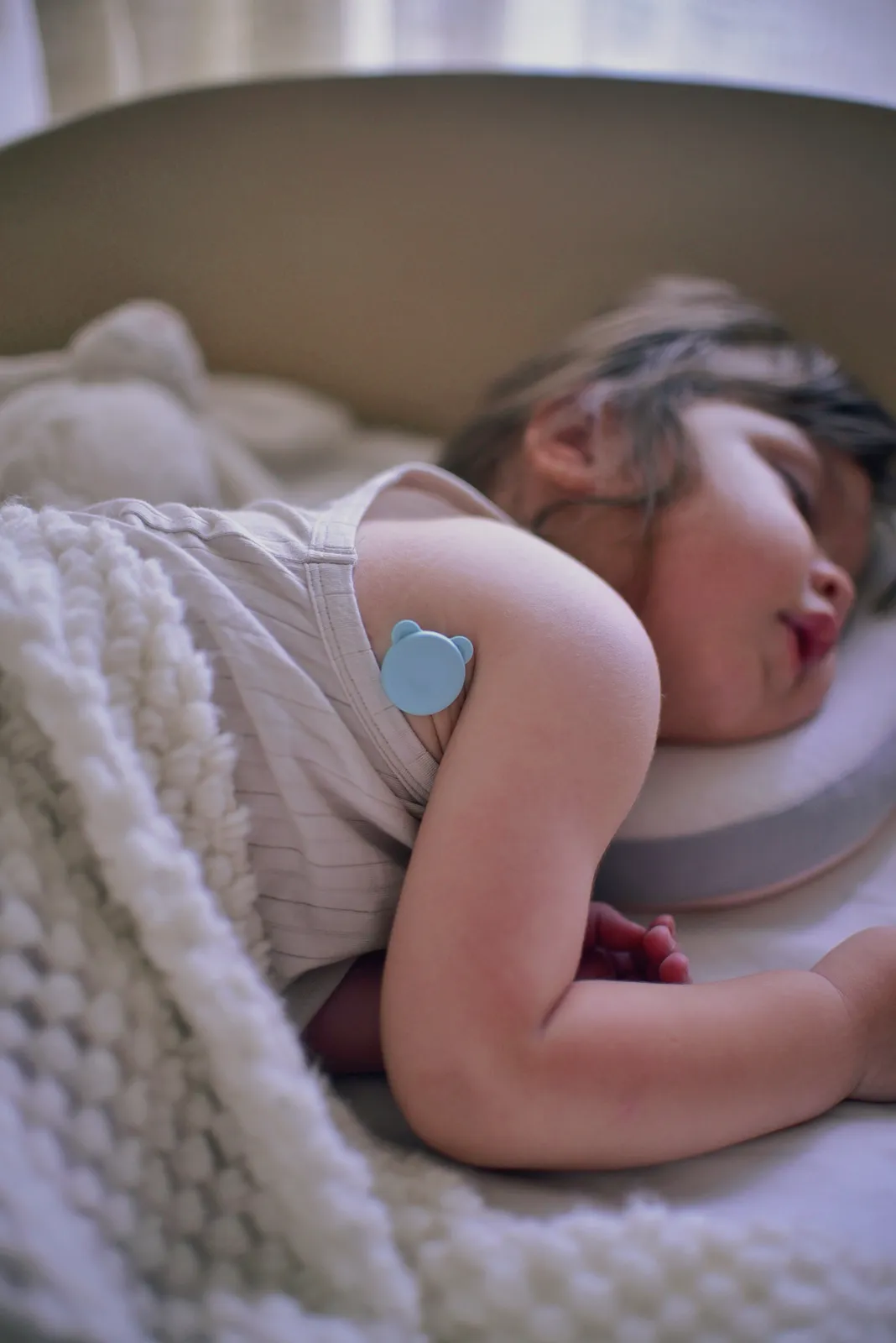
Sticks under the arm with a hypoallergenic patch. Records every 5 seconds, runs 7 days on a coin battery, weighs just 2 grams.
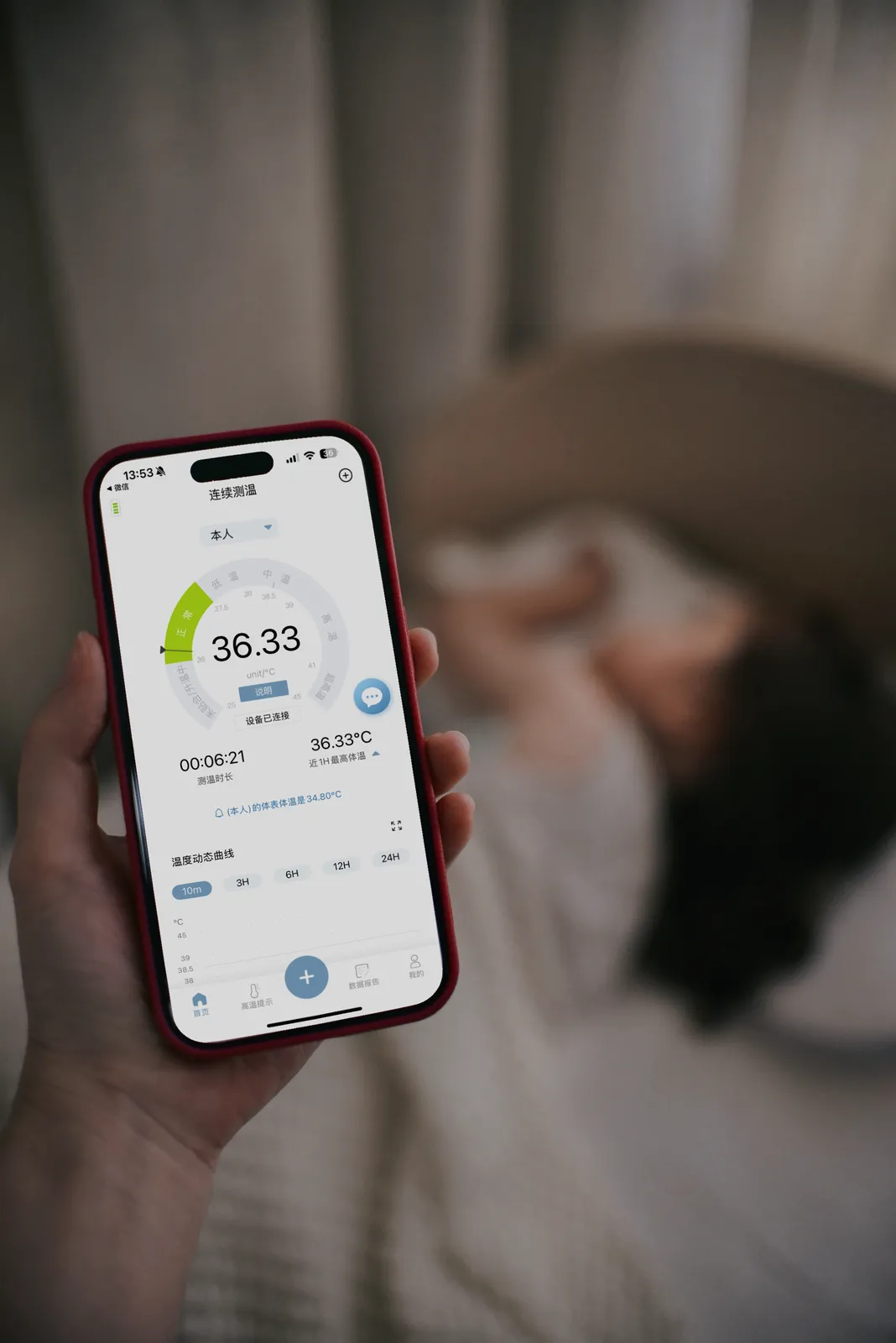
Product detailsCompanion App
Live readings, full fever curve, custom alert thresholds and family sharing — so caregivers sleep until the moment it matters.
See the appBedside Terminal
A standalone display for patients and caregivers without smartphones. Current temperature and 1-hour peak, always visible.
See the terminalContinuous body temperature monitoring, from one patient to a thousand beds
The same sensor plugs into our Digital Temperature Monitoring System: Bluetooth gateways, a cloud dashboard and a nurse console. Plug-and-play deployment — no IT project required.
Digital monitoring system
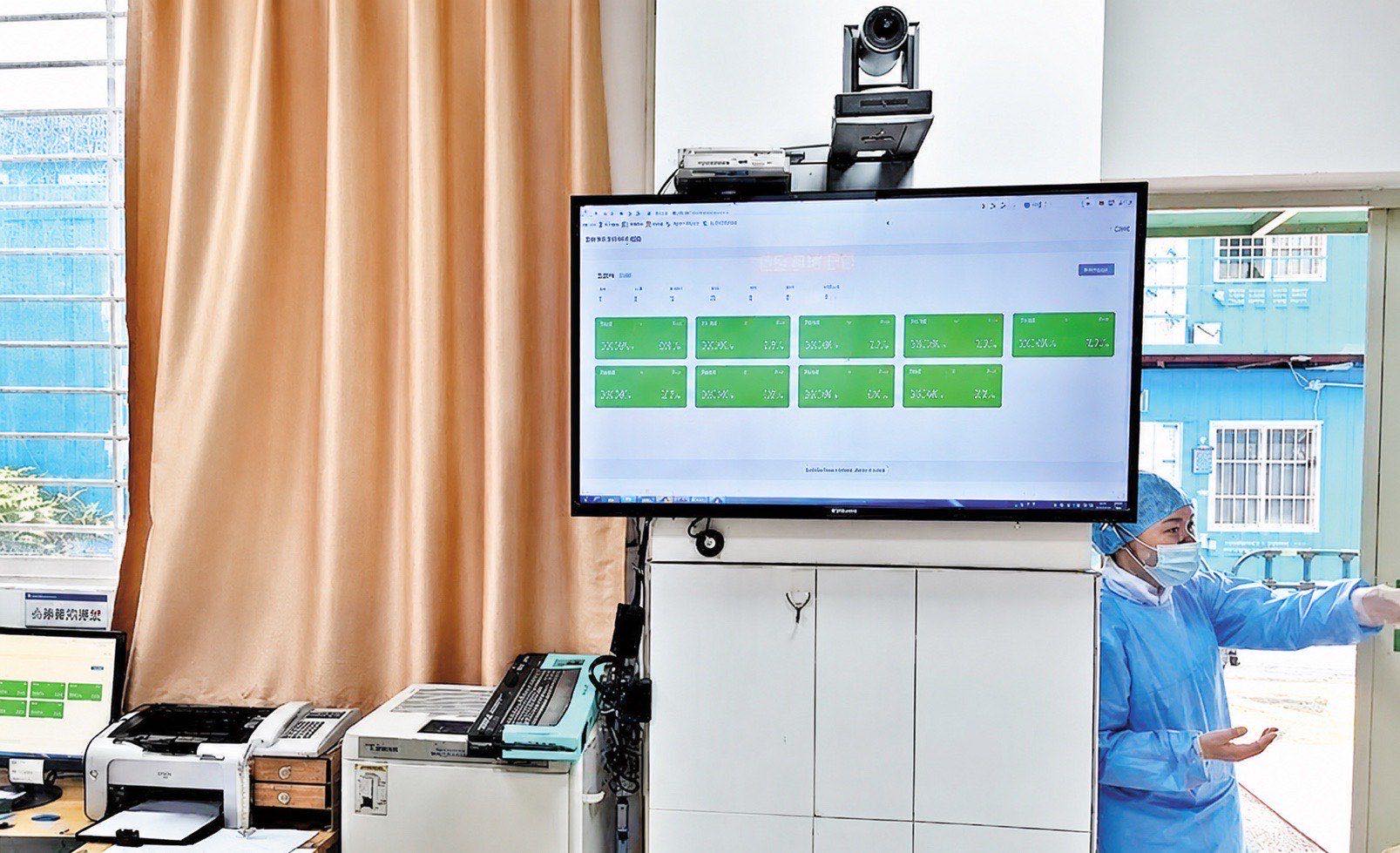
Ward-level continuous monitoring with automatic alerts, trend curves and exportable records for clinical teams.
Explore the systemBecome a distributor
Territory-based partnerships with export support, marketing assets and training for medical device distributors.
Partner with usOEM / ODM & CDMO
Build on our sensor platform, firmware and manufacturing line — from private label to fully custom development.
Manufacturing servicesWhere a smart wearable thermometer changes the day
Fever nights with a baby, post-op monitoring, outbreak screening at scale — the P20 platform adapts to each.
Baby & child fever
Continuous overnight monitoring with alerts, so parents stop checking every hour.
Elderly care
The bedside terminal works with zero smartphone setup — ideal for senior care.
Hospital & clinic
Ward-level dashboards replace manual temperature rounds and paper charts.
Women's health
0.01°C resolution makes continuous basal body temperature tracking practical.
Continuous temperature monitoring, proven in the field
2022 Beijing Winter Olympics
Continuous temperature screening supporting closed-loop health management during the Games.
Shenzhen COVID quarantine
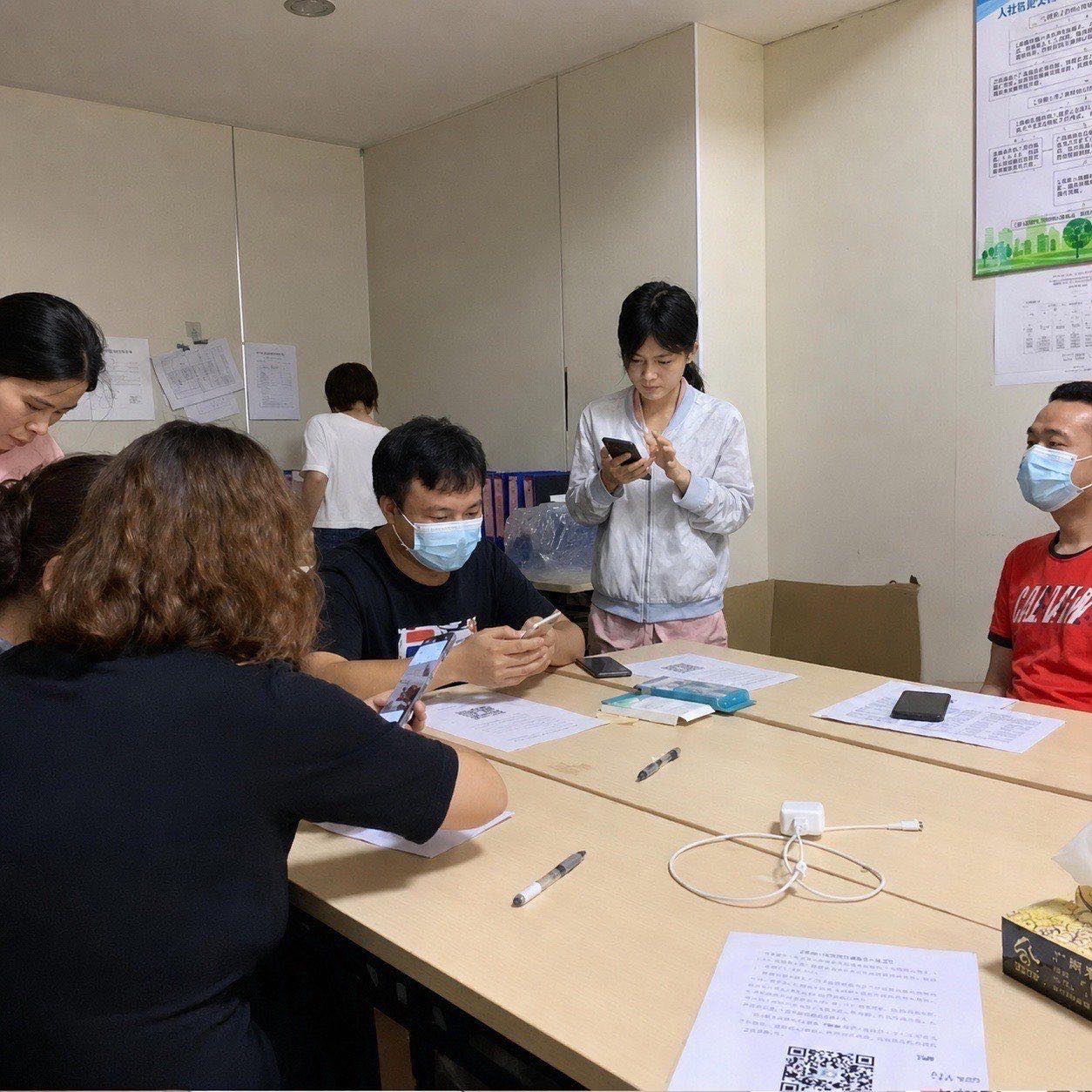
Around-the-clock monitoring of quarantined residents without staff entering rooms for manual checks.
Guangzhou & Nanjing outbreak response
Rapid large-scale deployment for outbreak temperature surveillance across facilities.
A wireless digital thermometer built by its manufacturer
Class II medical device
NMPA-certified with clinically validated ±0.2°C accuracy. Ask us about regulatory status in your market.
ISO 13485 · own factory
Full in-house production under an ISO 13485 quality management system and a certified medical device manufacturing license.
500M+ data points
The RESYS AI platform is built on real-world continuous temperature data from large-scale deployments.
Continuous body temperature monitoring, explained
What continuous body temperature monitoring actually means
A conventional thermometer answers one question: what is the temperature at this instant? Continuous body temperature monitoring answers a different and more useful one: what has temperature been doing, and what is it doing now? A P20 sensor stays on the body and samples every 5 seconds, so a fever episode arrives as a curve rather than a scatter of remembered numbers. That curve shows onset time, rate of rise, response to medication, and whether a fall is genuine or a dip between spikes. For clinicians and caregivers alike, the shape of the curve routinely carries more information than any single reading taken from it.
Why a continuous fever monitoring system beats spot checks
Spot checks sample a moving signal a few times a day, and every gap between them is a blind window. Fevers do not schedule themselves around rounds: the 2am spike, the post-medication rebound, the slow drift in an elderly patient with a blunted immune response — all of these happen between measurements. A continuous fever monitoring system closes those windows by removing the human from the measurement loop entirely. Nobody has to remember, wake a sleeping child, or walk a ward with a thermometer. The system measures, and it escalates to a person only when a threshold you defined is actually crossed.
Accuracy that holds up over days, not seconds
Continuous monitoring only helps if the readings are trustworthy over long wear. P20 is a Class II medical device with clinically validated ±0.2°C accuracy and 0.01°C resolution, and every unit is individually calibrated against reference standards before it leaves our line — accuracy is a manufacturing step here, not a datasheet claim. Axillary placement under a hypoallergenic patch is gentle enough for continuous multi-day wear, including on newborns, and continuous sampling smooths out the positioning sensitivity that makes single ear or forehead readings inconsistent between operators.
One sensor, from home bedside to hospital ward
The same 2g sensor serves a parent watching one feverish child and a nurse station watching sixty beds. What changes is the receiver: the companion app for families, the bedside terminal for patients without smartphones, or Bluetooth gateways feeding a cloud dashboard and nurse console for facility-scale deployment. For distributors this means one product line addressing retail, clinical and institutional demand. For hospitals it means continuous temperature monitoring that deploys ward by ward without an IT project or wiring.
Continuous temperature monitoring questions
What is continuous body temperature monitoring?
It is temperature measurement that runs without human intervention. A wearable sensor stays on the body and records automatically at a fixed interval — every 5 seconds for P20 — producing an unbroken temperature curve instead of isolated readings. Software applies alert thresholds to that stream, so a person is notified only when the temperature actually crosses the limit they set.
How accurate is a wearable continuous thermometer compared to a regular one?
P20 is a Class II medical device with clinically validated ±0.2°C accuracy and 0.01°C resolution, comparable to quality spot-check thermometers. The practical advantage is different: because it samples every 5 seconds, it captures spikes that manual checks miss entirely, and continuous sampling avoids the positioning inconsistency that affects single ear or forehead readings.
How long can P20 monitor temperature continuously?
Up to 7 days on a single CR1225 coin battery at 5-second sampling. That covers a typical fever episode, a post-operative recovery window, or a segment of a basal body temperature cycle without any intervention. Patches are replaced as needed; the sensor itself is reusable.
Can a continuous fever monitoring system cover a whole hospital ward?
Yes. P20 sensors pair with Bluetooth gateways that feed a cloud dashboard and nurse console, so every monitored bed appears on one screen with automatic threshold alerts. Deployment is plug-and-play — gateways plug into wall sockets, no wiring or network build-out is required, and facilities typically start with a pilot ward before scaling.
Is P20 safe for babies and newborns?
Yes. The sensor weighs 2 grams and attaches under the arm with a hypoallergenic medical-grade skin patch designed for continuous wear on sensitive skin, including newborns. There is nothing inserted in the ear, no glass, and no mercury.
Do you supply distributors, hospitals and OEM customers?
Yes — P20 is supplied B2B only. We work with medical device distributors and importers on territory partnerships, with hospitals and care facilities on system deployments, and with product companies on OEM, ODM, SDK and CDMO projects. MOQ starts from 10 units with volume pricing tiers. Contact our export team for a quote.