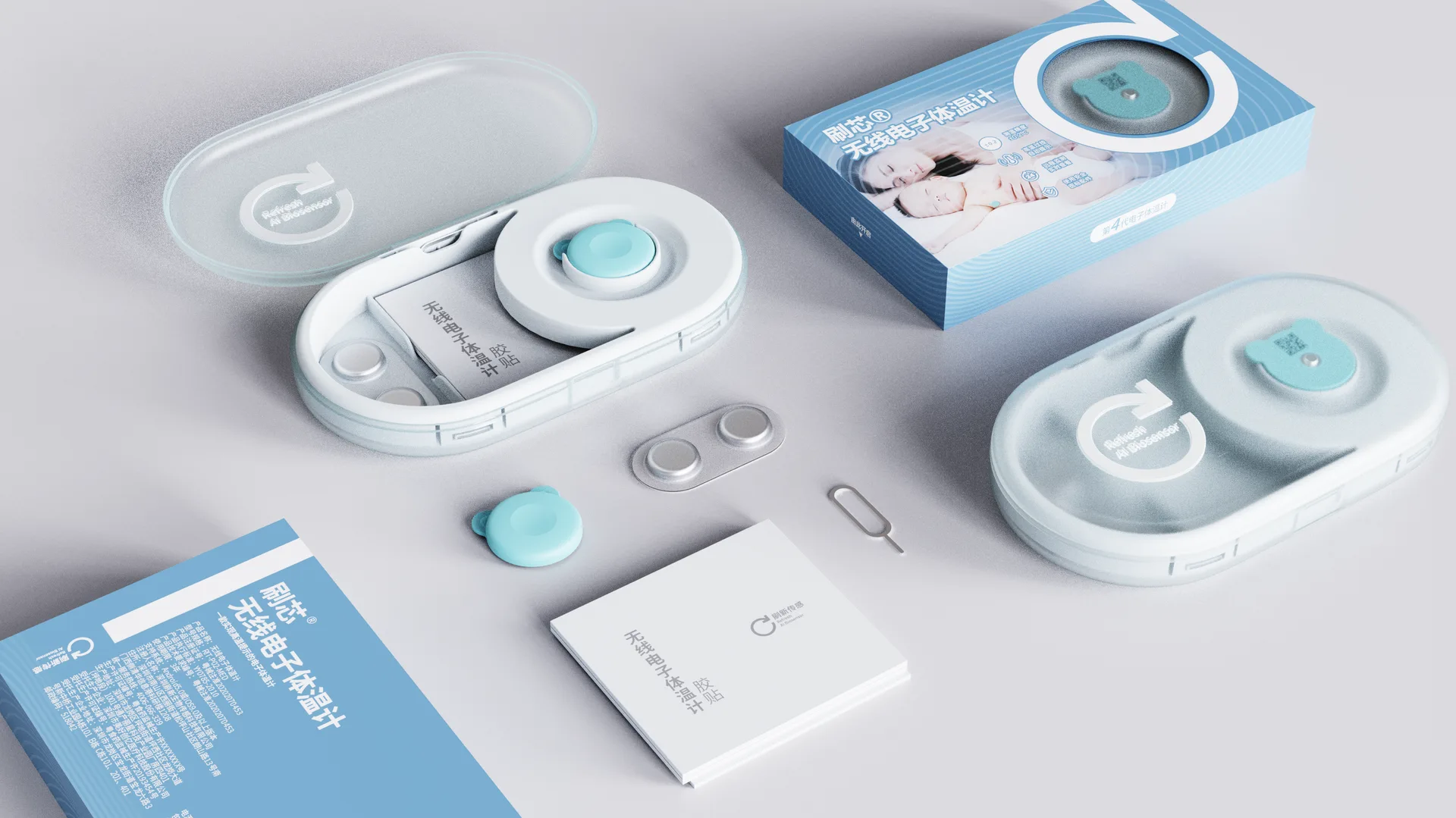
Sleep through fever nights. P20 does the watching.
A 2g sensor under the arm records every 5 seconds while your child sleeps — and wakes you only at the exact moment the fever crosses your alert threshold.
Why choose our continuous baby thermometer
Continuous vs spot-check thermometers
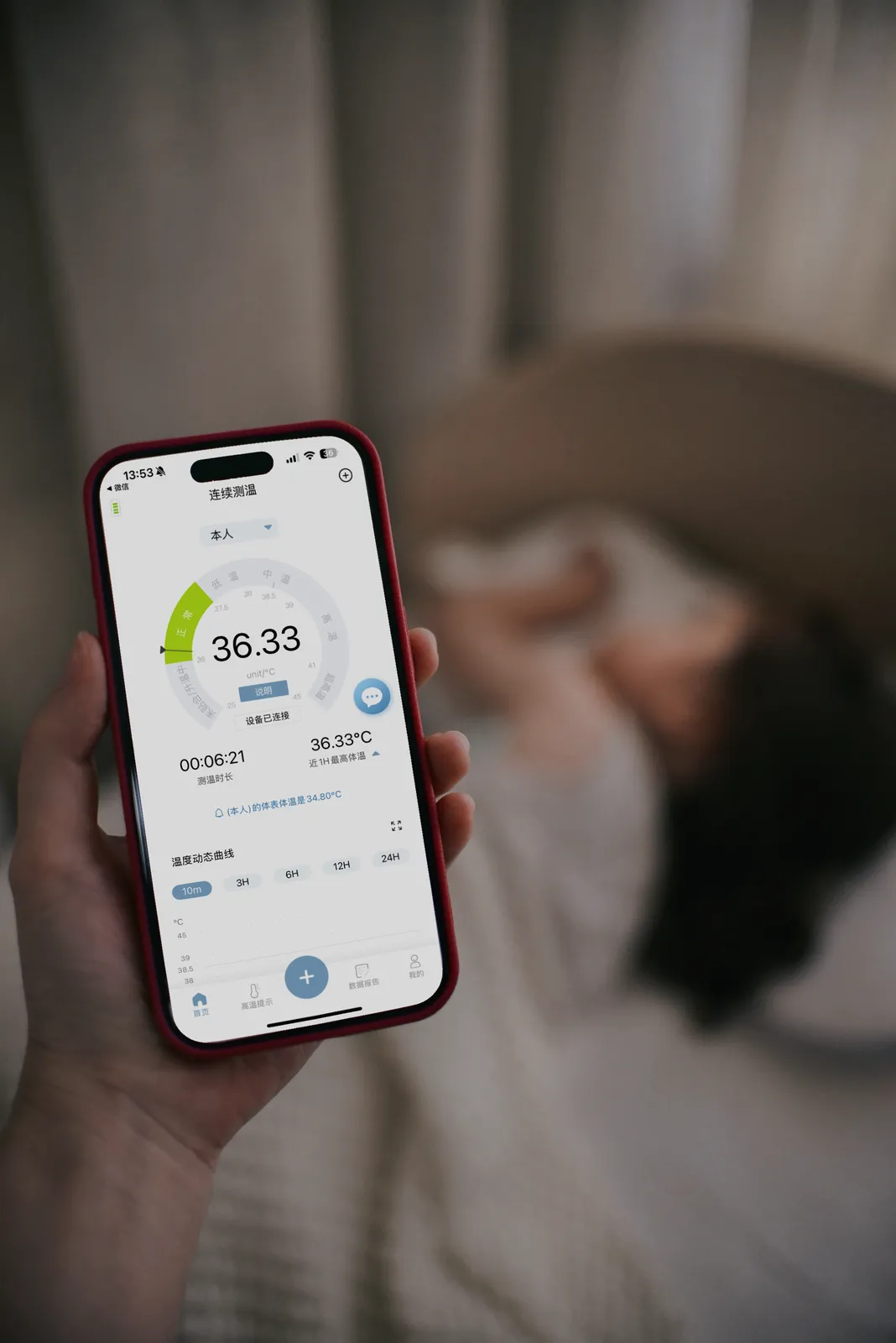
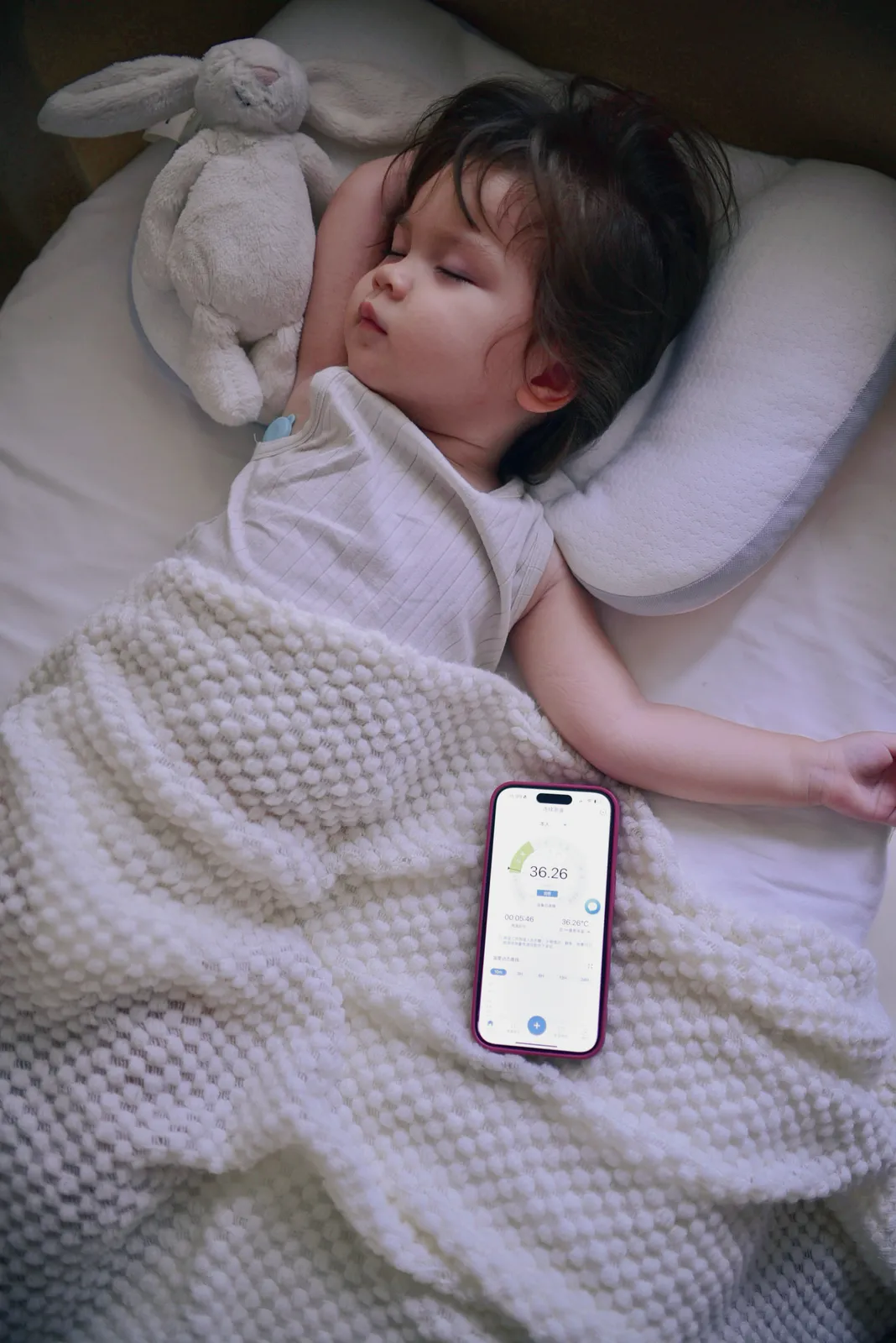
An ear or forehead thermometer gives one reading. P20 sits under the arm and samples every 5 seconds through the night, showing when temperature changes rather than only what it was at the moment you checked.
Monitor fever without waking your baby
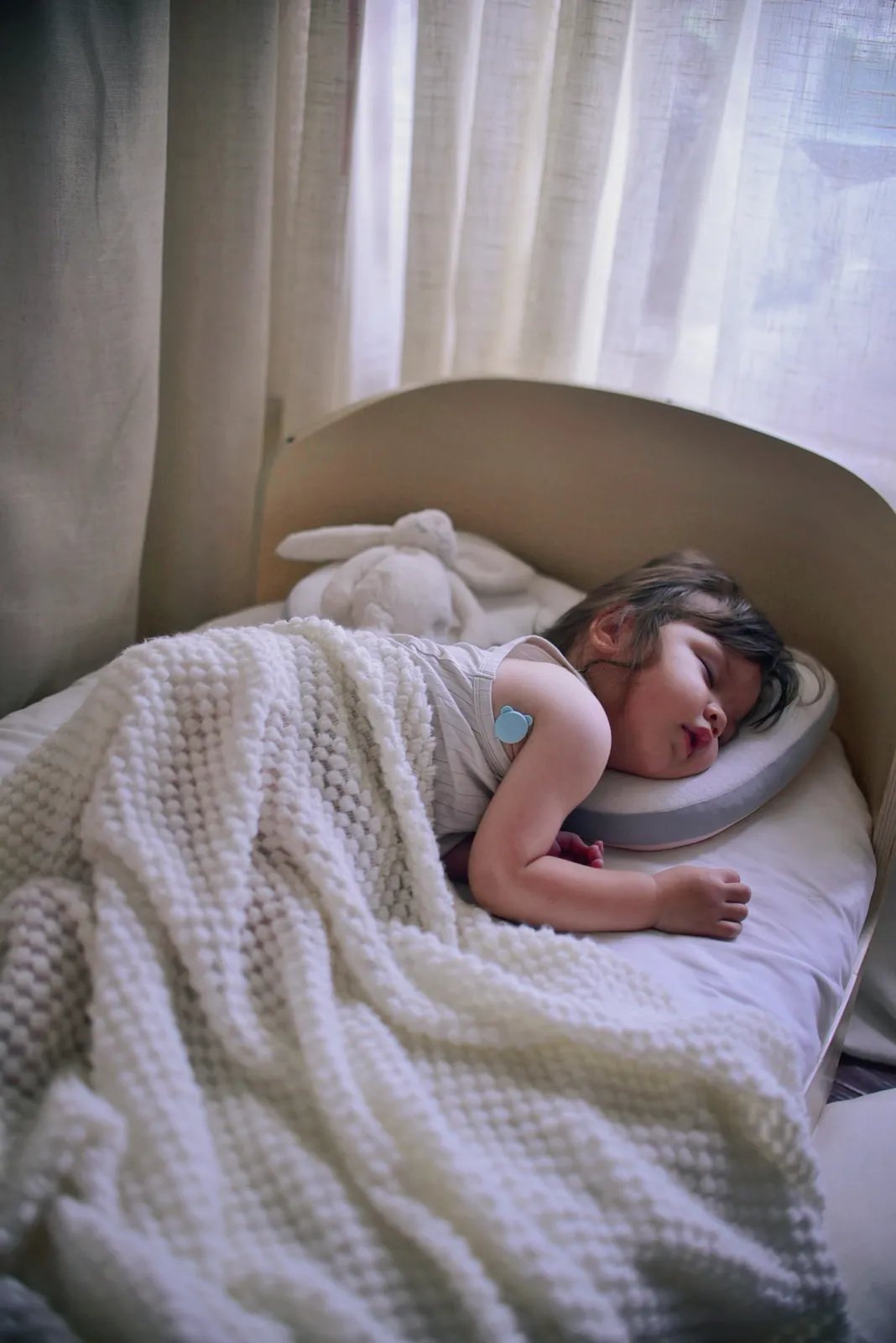
Manual checks disturb sleep and still leave long gaps between readings. Set an alert before bedtime and let P20 notify you only when the temperature crosses your chosen threshold.
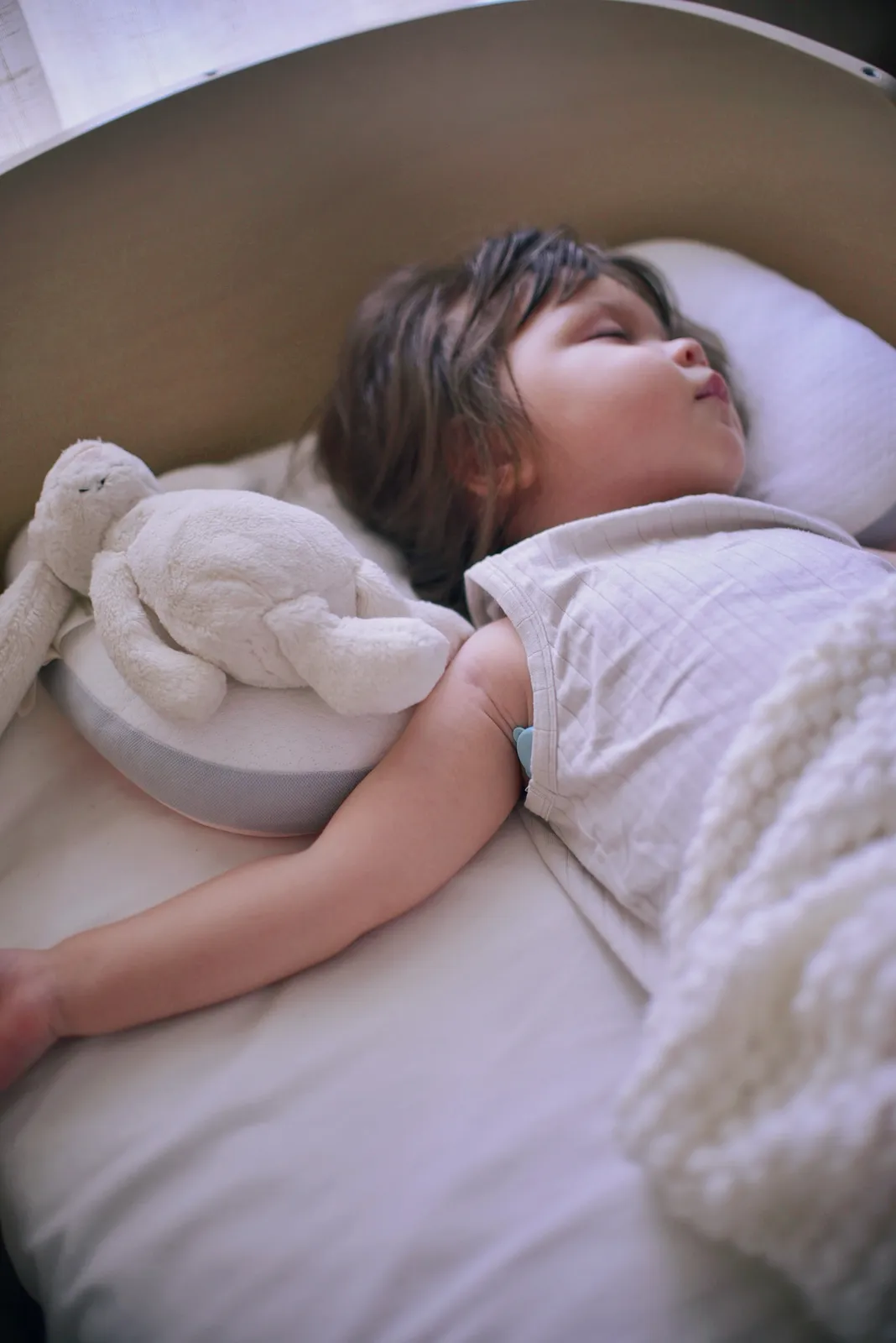
Know when the blanket comes off
Kick-blanket detection watches for an unexpected change in skin temperature and alerts the caregiver when the child may be uncovered.
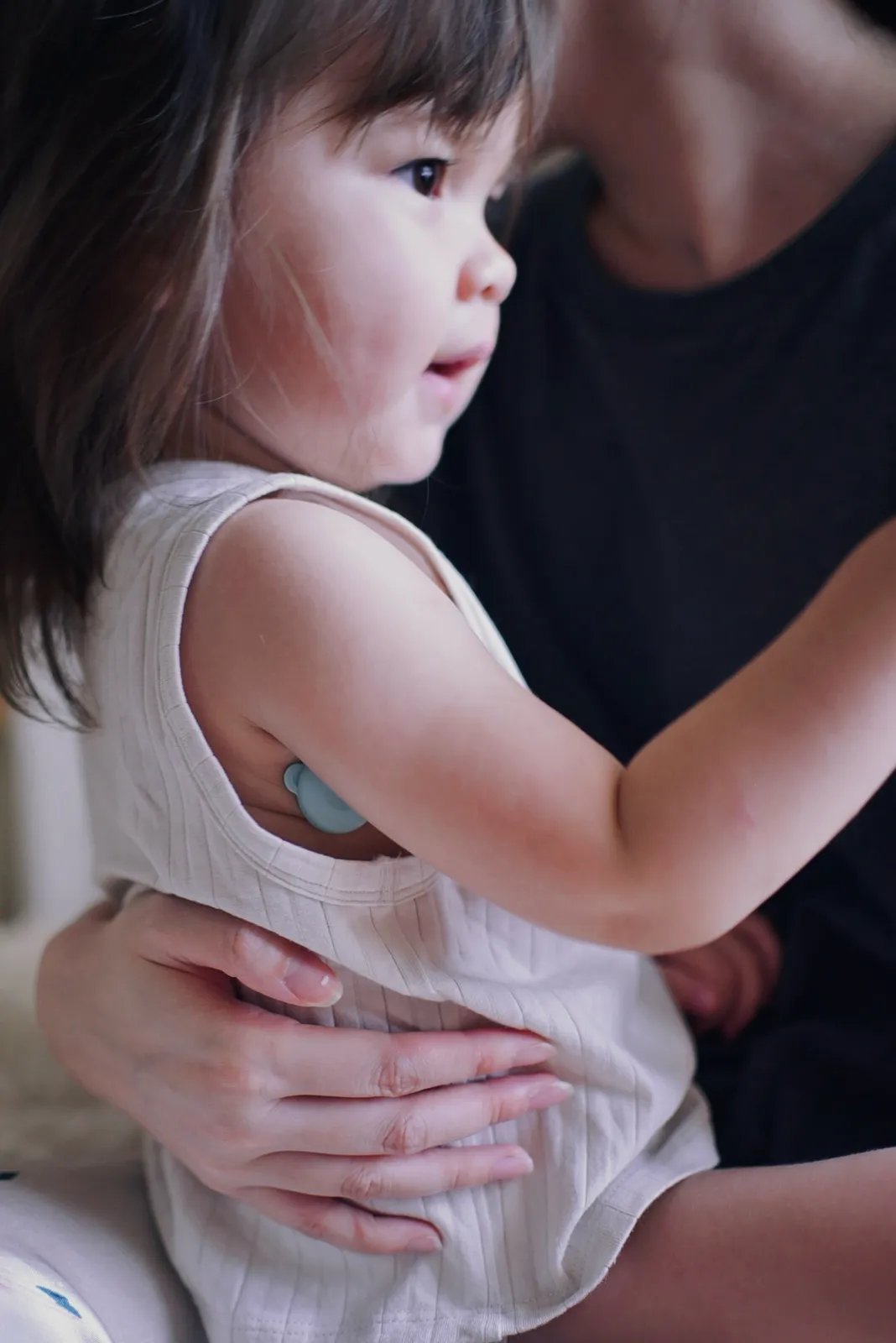
Designed for safe, comfortable wear
P20 weighs 2 grams and attaches externally under the arm with a hypoallergenic medical-grade patch. There is no glass, mercury or ear insertion, making it suitable for newborns and older children.
Baby fever monitor vs manual fever checkups
Manual checks provide snapshots. Continuous monitoring shows the whole night, so parents and paediatricians can act on the actual fever curve.
| Manual fever checkups | Continuous baby fever monitor | |
|---|---|---|
| Sleep | ✗ Wake the child to take a reading | ✓ Measures while the child sleeps |
| Overnight coverage | ✗ Long gaps between checks | ✓ Samples every 5 seconds |
| Fever alerts | △ Only when someone checks | ✓ Alerts when the set threshold is crossed |
| Doctor's view | △ It felt high around 2am | ✓ Exportable curve with onset, peak and response |
Samples, spec sheets, distributor pricing and OEM/private-label terms for the continuous fever monitor line are available on request.
Comfortable overnight fever monitoring for babies
Nothing to wake the child, and nothing to put in an ear or under a tongue.
Alerts only when it matters
Set a threshold like 38.5°C. P20 stays silent until that exact moment, then your phone buzzes — no hourly wake-ups, no guessing.
Remote monitoring
The live reading and the alerts arrive on your phone, so no one has to sit beside the bed to keep watch. Family sharing lets a partner, a grandparent or a babysitter follow the same sensor and get the same alerts at the same time.
A full curve for the doctor
Every reading from the whole night, in one exportable graph. Doctors adjust treatment based on the trend, not a single number.
Hypoallergenic skin patch
Medical-grade patches are designed for sensitive skin and continuous wear, including newborn use.
Just 2 grams
The lightweight sensor sits under the arm, so most children forget it is there while they sleep.
Nothing inserted
No mercury, no glass and nothing in the ear — just a small external sensor that stays in place.
Baby fever monitoring FAQs
Is a wearable baby fever monitor accurate enough to trust overnight?
In clinical validation, P20 was measured against a mercury thermometer reference and stayed within ±0.2°C. As a Class II medical device, it then records continuously through the night, giving caregivers the full temperature trend instead of isolated manual readings.
At what age can a baby start using a continuous temperature monitor?
The hypoallergenic patch is designed for continuous wear on sensitive skin, including newborns. As with any wearable health device, parents should check placement doesn't irritate the skin and consult their paediatrician for guidance specific to premature or medically fragile infants.
How do I set a fever alert threshold for my child?
In the P20 companion app, you choose the exact temperature that should trigger a notification — commonly 38.0–38.5°C for children, though your paediatrician may recommend a different threshold. The app stays silent below that number and alerts immediately once it's crossed.
Can I share my baby's temperature readings with my partner or a grandparent?
Yes. The companion app supports family sharing, so multiple phones can watch the same sensor's live readings and receive the same alerts simultaneously — useful for a working parent, a co-parent elsewhere, or a grandparent helping with childcare.
What happens to the data after the fever passes — can I show it to a doctor?
The full night's temperature curve stays available in the app and can be exported. Rather than describing a fever from memory, parents can show the paediatrician the exact onset time, peak, and how it responded to any medication given.